
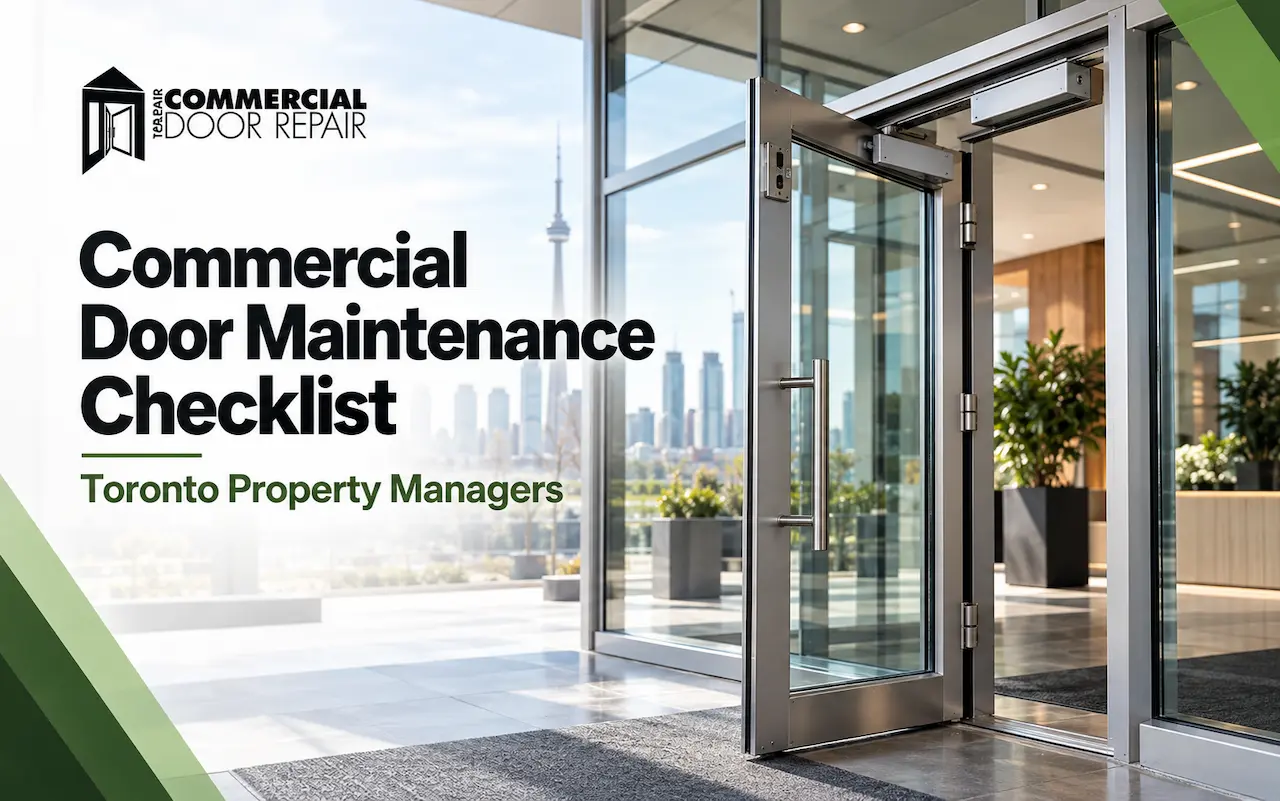
Your commercial doors handle hundreds of entries daily, through Toronto winters and humid summers. Without regular maintenance, you’re looking at emergency repairs, failed inspections, and liability issues.
Here’s the exact checklist we follow for commercial properties across the GTA broken down by frequency and priority.
Daily Visual Checks (5 Minutes)
These quick checks catch problems before they become emergencies. Train your building staff to spot these issues during their regular rounds.
- Door opens and closes smoothly without sticking or dragging
- No visible damage to glass panels, frames, or weatherstripping
- Automatic doors respond properly to sensors and activation
- Panic bars and exit devices engage and release correctly
- Door fully seals when closed no light gaps or drafts
If daily checks reveal issues, document them immediately. Small problems snowball fast in high-traffic commercial settings.
Monthly Inspection Tasks
Set a calendar reminder for these monthly tasks. They take 15-20 minutes per door but prevent most major failures.
Hardware Function
- Test closer speed and latching force adjust if needed
- Check hinge tightness and alignment
- Lubricate pivot points, hinges, and lock mechanisms with manufacturer-approved products
- Inspect weatherstripping for tears, compression, or gaps
- Verify all fasteners remain tight temperature fluctuations loosen hardware faster than you’d expect
Automatic Door Systems
If you have commercial automatic doors, monthly checks are non-negotiable. Test all safety sensors, verify opening and closing speeds match AAADM standards, and clean sensor lenses and activation pads.
For hydraulic door closers, check for oil leaks around the cylinder and verify adjustment screws haven’t loosened from vibration. Temperature changes affect hydraulic fluid viscosity, so closer speeds may need seasonal adjustment.
Glass and Glazing
- Inspect glass for chips, cracks, or stress fractures
- Check glazing compound for deterioration
- Clean door glass and frames to spot hidden damage
- Look for condensation between double-pane units indicating seal failure
Quarterly Maintenance Tasks
These require more time and sometimes specialized tools. Schedule them during low-traffic periods.
- Deep clean and lubricate all moving parts including overhead track systems
- Inspect and tighten all fasteners Toronto freeze-thaw cycles loosen hardware faster than you’d expect
- Test emergency exit functionality and panic hardware under load
- Check door alignment adjust if doors don’t hang plumb or drag on thresholds
- Inspect thresholds for wear, trip hazards, or water intrusion
- Verify door sweeps create complete contact across the full width
Replace worn commercial door hardware during quarterly checks, before it fails completely. Waiting until something breaks always costs more and often damages surrounding components.
Annual Professional Inspection
Even with diligent in-house maintenance, bring in certified technicians annually. We catch things property managers miss frame deterioration, code compliance issues, and manufacturer-specific adjustments that require calibration tools.
Annual inspections should include load testing on fire doors, complete automatic door safety system verification, structural frame assessment, and full hardware replacement planning based on wear patterns.
For buildings with AADM-certified automatic systems, annual professional service isn’t optional it’s required to maintain compliance and insurance coverage.
When to Skip DIY and Call Professionals
If your door adjustment requires frame modification, involves automatic door sensors or control boards, affects fire rating or emergency egress certification, or shows signs of structural damage don’t attempt it yourself. You’ll void warranties and create liability exposure.
We’ve fixed countless “property manager specials” where well-intentioned adjustments made things worse. Know your limits and protect your building’s coverage.
Seasonal Toronto Considerations
Before each winter, inspect and replace weatherstripping, verify door sweeps create full contact, check for frame expansion gaps, and test closer performance in cold temperatures. Hydraulic closers slow significantly below -10°C and may need adjustment.
Spring brings different challenges check for water infiltration damage from snowmelt, verify caulking hasn’t cracked from freeze-thaw cycles, and inspect for salt corrosion on bottom rails and thresholds. Summer humidity can cause wooden frames to swell, requiring clearance adjustments.
Frequently Asked Questions
How often should commercial doors be serviced professionally?
At minimum, annually for standard manual doors. Automatic doors and high-traffic entrances need professional service every 6 months. Fire-rated doors require annual certification inspections regardless of condition.
What causes commercial doors to fail most often?
Deferred maintenance on door closers. A $200 closer replacement becomes a $2,000 frame repair when the door slams repeatedly for months. Second most common: ignoring minor weatherstripping damage until water infiltrates the frame.
Can property managers handle all door maintenance in-house?
Basic cleaning, lubrication, and visual inspections yes. Anything involving adjustments to automatic systems, fire door certification, or structural repairs requires certified technicians. Insurance and building codes both require professional certification for certain work.
How long does a commercial door closer typically last?
Quality closers last 7-10 years with proper maintenance in moderate-traffic settings. High-traffic entrances might need replacement every 4-5 years. Weather exposure accelerates wear significantly.
What’s the most overlooked maintenance item?
Threshold condition. Everyone checks the door itself, but worn or damaged thresholds create trip hazards, water infiltration, and accessibility code violations. We see this missed constantly on otherwise well-maintained buildings.
Ready to Schedule Commercial Door Maintenance in Toronto?
Commercial Door Repair Toronto provides comprehensive maintenance programs for buildings across the GTA. Our AADM-certified technicians handle everything from routine inspections to emergency repairs, keeping your doors compliant and functioning year-round.
Call (647) 477-0557 or visit Commercial Door Repair Toronto to book your Toronto appointment.