
A commercial door that drags on the floor creates noise, slows traffic, and accelerates wear on both the door and the frame. If your door scrapes when it swings open or requires force to close, something has shifted, and ignoring it only makes the problem worse.
The good news? Most dragging doors have fixable causes. Let’s walk through what creates this issue and what you should watch for.
What Causes Commercial Doors to Drag on the Floor
Dragging happens when a door’s alignment changes or when components wear out over time. Commercial doors see constant use, so even small shifts add up quickly.
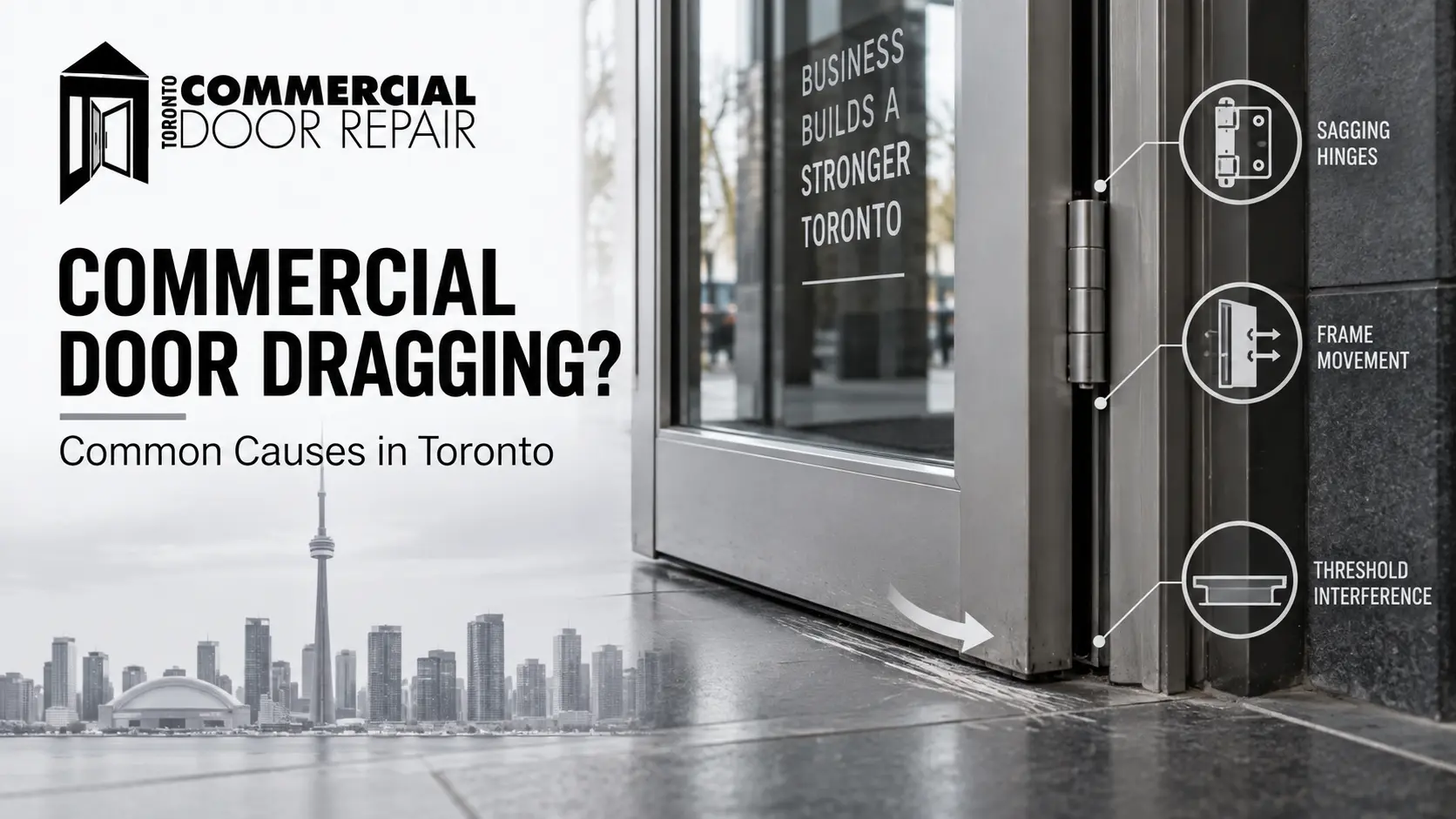
Sagging Door Weight
Heavy commercial doors naturally settle over years of use. The door’s weight pulls down on hinges and hardware, creating a slight drop on the latch side. This is especially common with solid wood, steel, or insulated glass doors.
Worn or Loose Hinges
Hinges take the full load of every door swing. Over time, hinge pins wear down, screws loosen in the frame, or the hinge plates themselves bend slightly. When this happens, the door loses its original height and begins to scrape the floor. If you notice gaps at the top of the door that weren’t there before, hinge wear is usually the culprit.
Frame Movement or Settling
Building foundations shift. This is normal in Toronto, especially in older commercial buildings or spaces with high foot traffic. When a frame moves even a quarter inch, a properly aligned door suddenly drags. You’ll often see this paired with difficulty latching or uneven gaps along the frame.
Threshold Interference
Sometimes the door itself is fine; the problem is what it’s dragging against. Damaged thresholds, built-up debris, uneven flooring repairs, or newly installed mats can all create contact where there shouldn’t be any.
Loose or Damaged Hardware
Pivot points, closers, and mounting brackets all affect door alignment. When a closer loses tension or a pivot plate shifts, the door’s path changes. The result is scraping, resistance, or both.
Warning Signs Your Door Is Starting to Drag
Most dragging issues develop gradually. You can catch them early if you know what to listen and look for.
- Scraping or grinding noise when the door opens or closes
- Visible resistance: the door slows or stops partway through its swing
- Uneven gaps between the door and frame, especially at the top
- Difficulty engaging the latch or lock
- Scuff marks on the floor directly below the door edge
- Worn paint or metal along the bottom edge of the door
If you’re seeing multiple signs at once, the problem is progressing. Catching it early means avoiding damage to flooring, weatherstripping, and the door hardware itself.
Why Dragging Doors Get Worse Over Time
A door that drags doesn’t fix itself. Every time it scrapes, it wears down a little more, and so does the floor beneath it. The bottom edge of the door can develop a bevel, which changes how it sits in the frame. Weatherstripping tears. Hinges loosen further under the added stress. In high-traffic commercial settings, this cycle accelerates quickly.
When to Call a Professional
If the dragging is caused by debris, a loose screw, or a simple obstruction, you can handle it in-house. Clear the threshold, tighten accessible screws, and check for objects blocking the door’s path.
But if the problem involves worn hardware, bent hinges, frame movement, or alignment issues you can’t trace, don’t try to force a fix. Adjusting commercial door hardware without the right tools or knowledge often makes things worse, especially with fire-rated doors or automatic systems where alignment tolerances are tight.
How to Prevent Future Dragging Issues
Regular maintenance catches problems before they become expensive. Schedule inspections twice a year to check hinge tightness, hardware alignment, and door clearance. Lubricate moving parts. Replace worn weatherstripping before it tears completely.
If your building is prone to settling, common in older Toronto commercial properties, monitor door alignment as part of your seasonal walkthroughs. A door that clears the floor in summer might start dragging once winter hits and humidity drops.
Frequently Asked Questions
Can I adjust a dragging door myself?
For minor adjustments like tightening screws or clearing debris, yes. For hinge adjustments, hardware replacement, or alignment fixes, it’s safer to call a professional, especially if the door is fire-rated or part of an automatic system.
How long does it take to fix a dragging commercial door?
Most repairs take 1-2 hours, depending on the cause. Simple hinge adjustments are quick. Frame realignment or hardware replacement takes longer.
Will a dragging door damage my floor?
Yes. Constant scraping wears down flooring finishes, gouges tiles, and scratches concrete. The longer it drags, the more expensive the floor repair becomes.
Is door dragging covered under building insurance?
Usually not, unless it’s tied to a specific covered event like foundation damage. Normal wear and maintenance fall under property upkeep, not insurable claims.
What’s the cost to fix a commercial door that drags?
Costs vary based on the root cause. Minor adjustments run less than replacing hinges or realigning a frame. We assess the issue first and give you options before starting work.
Ready to get started in Toronto?
Commercial Door Repair Toronto is here to help with commercial door dragging on the floor in Toronto. Reach out today, and we’ll walk you through your options, answer your questions, and book a time that works for you.
Call (647) 477-0557 or visit Commercial Door Repair Toronto to schedule your Toronto appointment.