
Your aluminum storefront door is sticking, drafty, or showing corrosion around the frame. The question every property manager asks: is this a $300 repair or a $3,500 replacement?
After 16 years of commercial door work across Toronto, I can tell you the answer depends on three factors: the extent of the damage, the age of the system, and whether the door meets current building codes. Here’s how to make the right call.
Repair vs. Replacement: Cost Breakdown
| Issue | Repair Cost | Replacement Cost | Best Choice |
|---|---|---|---|
| Worn pivot or closer | $250–$450 | — | Repair |
| Single glazing panel crack | $350–$650 | — | Repair |
| Minor frame corrosion (surface) | $300–$500 | — | Repair |
| Severe frame corrosion (structural) | — | $2,800–$4,500 | Replace |
| Full glazing system failure | — | $3,200–$5,500 | Replace |
| Non-compliant legacy door (pre-2006) | — | $3,000–$6,000 | Replace |
Common Repair Issues We Fix
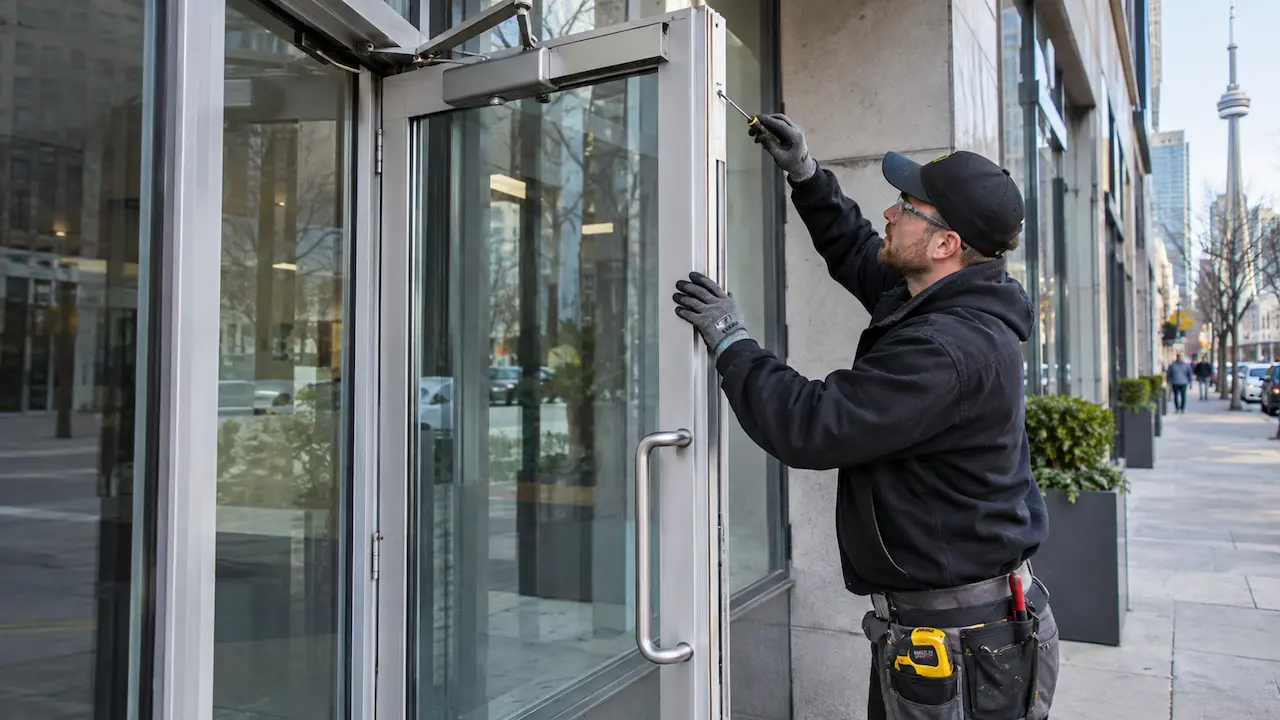
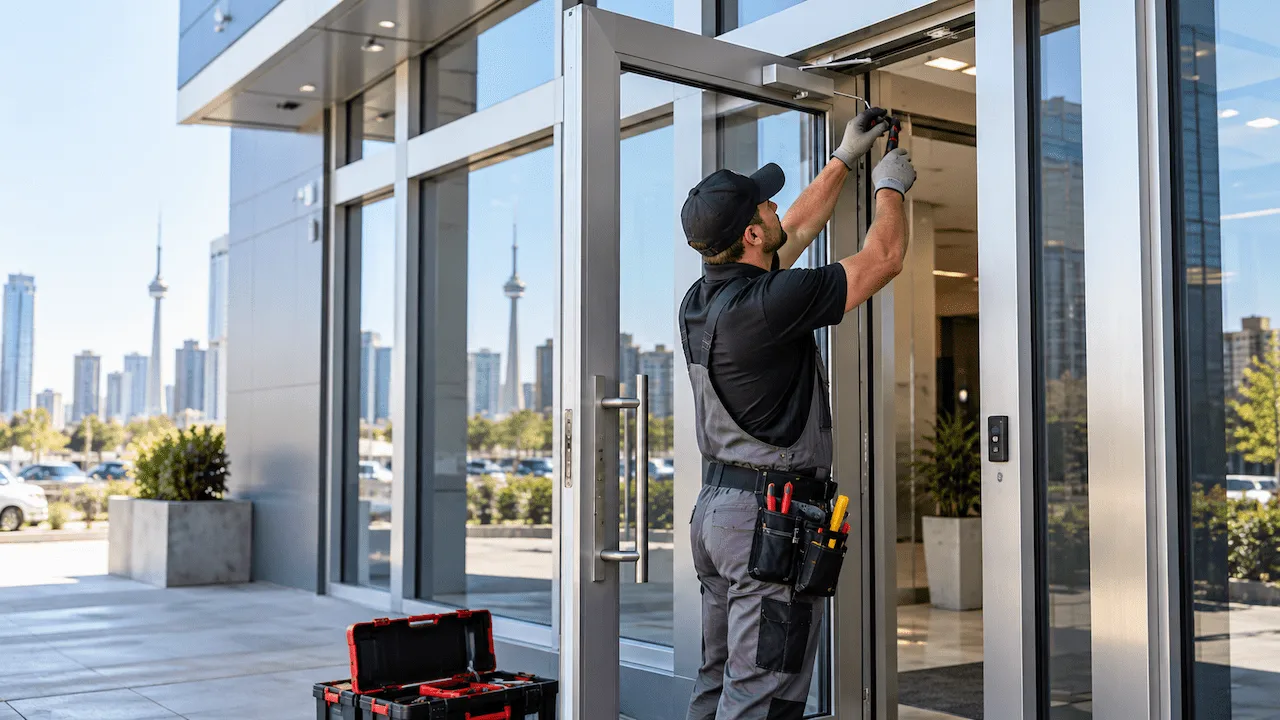
Most commercial aluminum door problems are mechanical or glazing-related, not structural. These are almost always worth repairing:
- Door closers losing hydraulic pressure or leaking fluid
- Pivot hinges worn from heavy traffic, causing door sag or binding
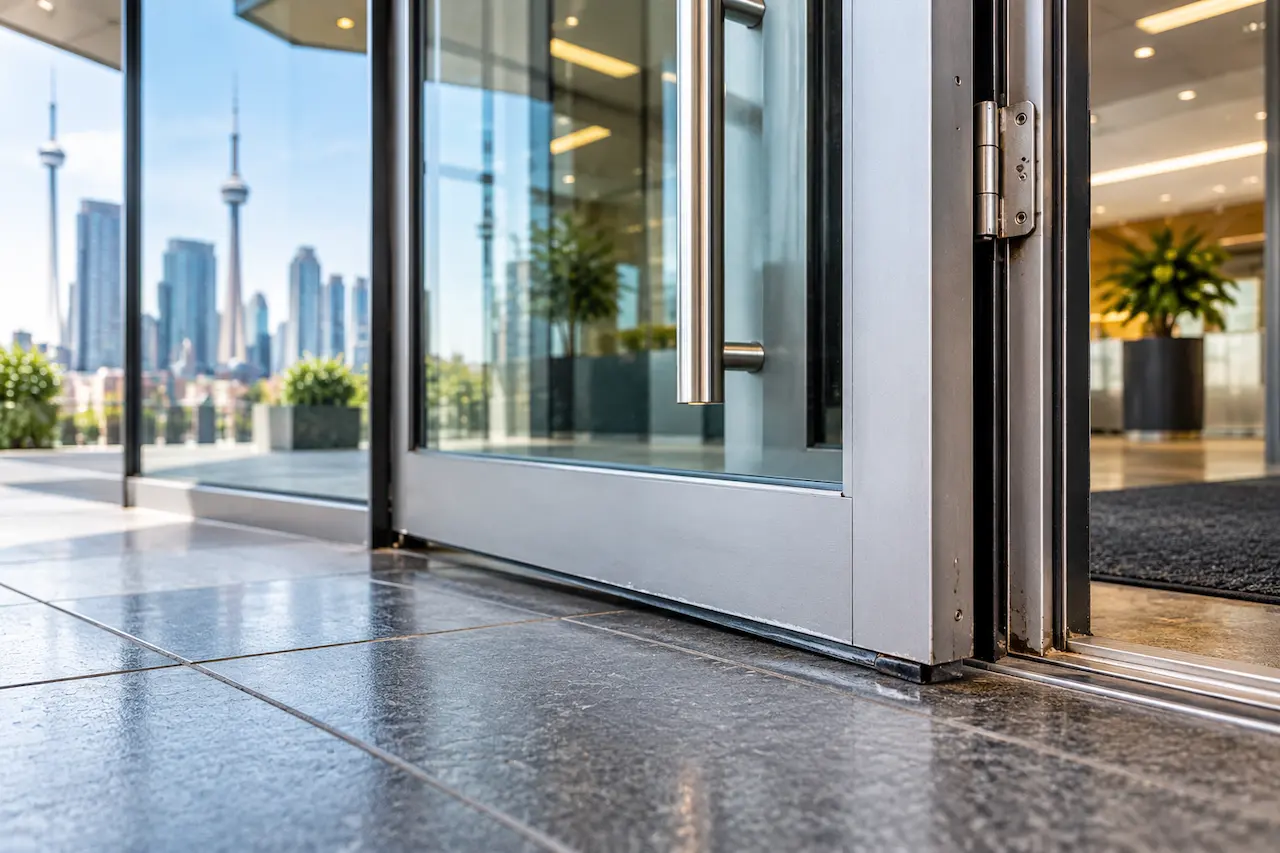
- Weatherstripping deterioration leading to drafts and water infiltration
- Lock cylinder or panic hardware malfunctions
- Single pane of insulated glass developing condensation or cracks
- Surface corrosion on aluminum frames from salt exposure
We keep most doors in service with repairs that cost a fraction of replacement. A broken closer is a $300 fix, not a reason to rip out a $4,000 entrance system.
When Repair Makes Sense
The Door Is Under 15 Years Old
If the aluminum frame and glazing system are structurally sound, repair it. Modern commercial aluminum doors are built to last 25–30 years with proper maintenance. Replacing functional hardware or glass on a 10-year-old door is smart economics.
Damage Is Isolated
A single component failure doesn’t mean system failure. If the frame is solid and only the hardware needs attention, we replace the faulty part and move on. This is the most common scenario we see.
The Door Meets Current Codes
If your door already complies with Ontario Building Code requirements for accessibility, energy efficiency, and fire rating (where applicable), there’s no regulatory reason to replace it. Fix what’s broken and keep it in service.
When Replacement Is the Smarter Choice
Structural Frame Corrosion
Surface rust is repairable. Deep corrosion that’s compromised the frame’s structural integrity is not. If the aluminum frame has pitting, flaking, or visible weakness at stress points, replacement is the only safe option. You can’t weld or patch aluminum frames back to code-compliant strength.
Full Glazing System Failure
When multiple insulated glass units fail showing condensation between panes, delamination, or broken seals—it’s usually more cost-effective to replace the entire door than to re-glaze every panel. At that point, you’re paying for labor on a system that’s likely nearing the end of its lifespan anyway.
Non-Compliant Legacy Systems
Older aluminum doors installed before modern energy codes may not meet current thermal performance standards. If your building is undergoing renovations or you’re dealing with HVAC inefficiency complaints, replacing single-pane or non-thermal-break aluminum doors can cut heating costs significantly.
We also see this with accessibility upgrades. If you’re adding automatic openers to bring a building into compliance, sometimes the door frame itself isn’t compatible with modern operators. In those cases, full replacement makes more sense than retrofitting incompatible hardware.
Repeated Repair Cycles
If you’re calling us back every six months for the same door, that’s a sign the system is done. When repair costs over two years approach 60–70% of replacement cost, you’re just postponing the inevitable. Replace it and reset the maintenance clock.
Frequently Asked Questions
How long does a commercial aluminum door repair take?
Most repairs closer replacement, pivot adjustment, weatherstripping, single glass pane are completed in 1–3 hours on site. We offer same-day service across the GTA for urgent issues. Full replacements typically take 1–2 days depending on custom sizing and glazing requirements.
Can you repair aluminum door frames that have been hit by a forklift or vehicle?
Minor dents and surface damage, yes. Severe impact damage that bends the frame or cracks welds, no. Aluminum doesn’t bend back into compliance the way steel sometimes can. If the frame is visibly deformed or the door no longer operates smoothly, replacement is the safer route.
Do you repair aluminum doors in condos and apartment buildings?
Absolutely. We work with property managers across Toronto on residential buildings, retail plazas, office towers, and institutional facilities. Whether it’s a lobby entrance or individual unit balcony doors, we handle commercial-grade aluminum systems of all types.
Will repairing my aluminum door improve energy efficiency?
It depends. Replacing worn weatherstripping and fixing gaps will reduce drafts and improve thermal performance on modern thermal-break doors. But if you have an old single-pane or non-thermal aluminum door, repairs won’t make it energy-efficient. You’d need to upgrade to a thermally broken frame and insulated glazing for real energy savings.
Ready to Repair Your Commercial Aluminum Door in Toronto?
Whether your door needs a quick hardware fix or a full replacement, Commercial Door Repair Toronto will give you an honest assessment and a transparent quote. We’ve spent 16 years helping Toronto property managers make smart, cost-effective decisions about their commercial entrances.
Call (647) 477-0557 or visit Commercial Door Repair Toronto to book your Toronto appointment.